Why Sin Keeps Returning: The "Sin-Confess-Repeat" Hamster Wheel (And Why Willpower Will Never Set You Free)
If you are exhausted from fighting the exact same battle over and over, you need a straight, biblical answer to why sin keeps returning. You know the cycle. You have lived it, and if you are honest, it is draining the life out of your walk with God.
You mess up—again. And it is the exact same thing you promised God three weeks ago, and three months before that, that you would never do again. You hate it, you pray against it, you grit your teeth, and yet somehow you keep ending up right back where you started, wondering why sin keeps returning no matter how badly you want to stop.
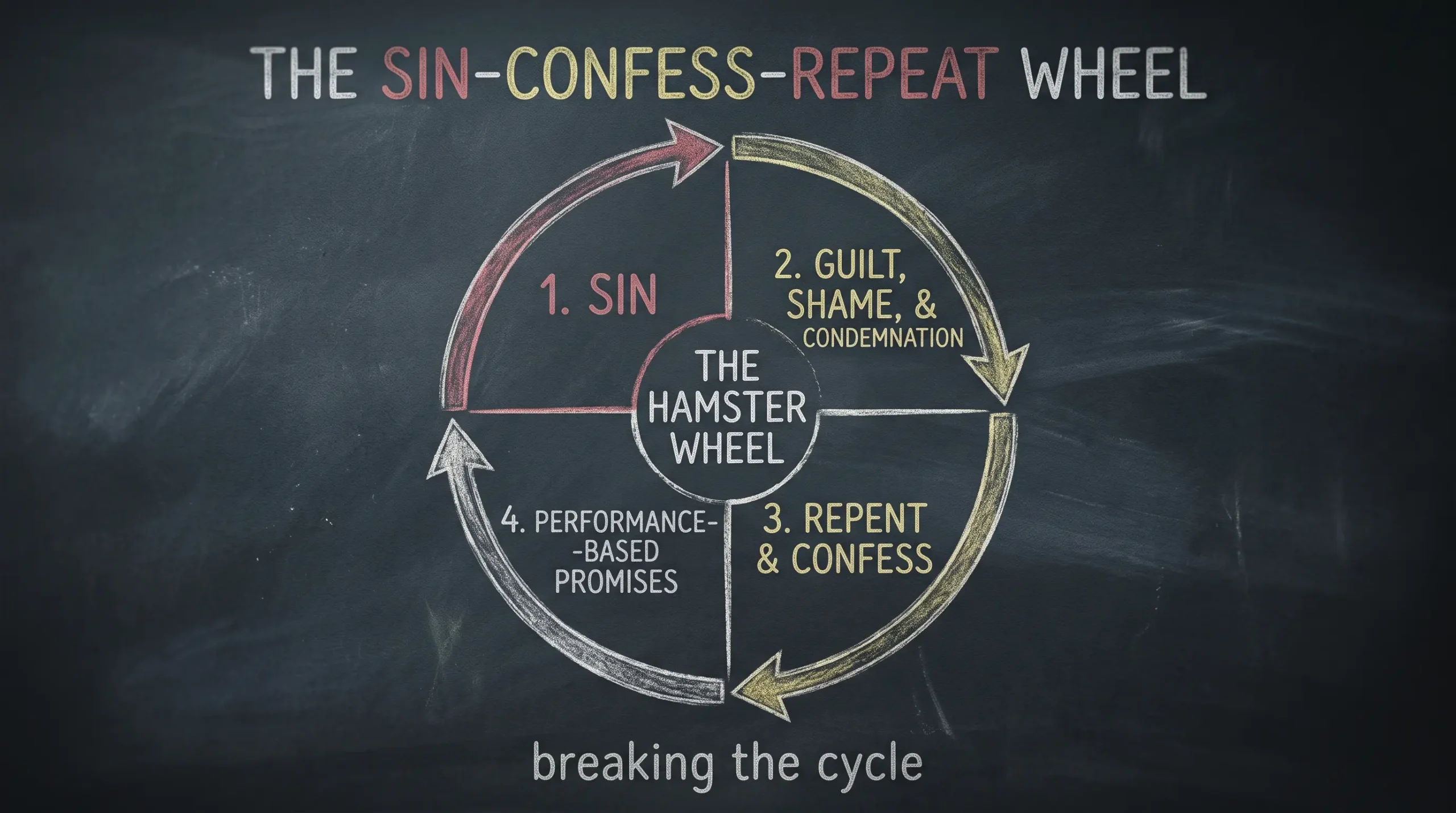
Diagram 1: The Sin-Confess-Repeat Wheel — Powered by Law, Shame, and Human Willpower.
I call this The Sin-Confess-Repeat Wheel. For millions of believers, their entire Christian walk is spent trapped inside this circle—running until their legs give out, getting nowhere, and wondering why the freedom Jesus bought on the cross feels a million miles away.
Listen closely: The reason you are stuck on this wheel isn't that you don't love God enough, and it isn't that you lack discipline. The core reason why sin keeps returning is that you are trying to win a New Covenant battle using Old Covenant willpower.
Let’s look directly at the four stages of this wheel so you can expose the religious trap for what it actually is—and then walk through the exact biblical blueprint to step off it for good.
Why Sin Keeps Returning: Anatomy of the "Sin-Confess-Repeat" Wheel
Believers rarely stay bound because they enjoy failing. They stay bound because the method they were taught to fight temptation actually fuels it. When you examine the four quadrants of the wheel, you see the exact mechanism behind why sin keeps returning.
Stage 1: Sin
Temptation hits, the pressure builds, and you cave. Now, as a born-again believer, why does that failure shake you to your core? Because inside your recreated spirit, you actually want to do what is right. The Apostle Paul described this exact frustration when trying to defeat fleshly habits through human effort:
"For what I will to do, that I do not practice; but what I hate, that I do." NKJV) — Romans 7:15 (NKJV)
When an unbeliever sins, their conscience barely registers a blip. When you stumble, you hate it because it violates the new nature God placed within you. Yet the moment you stumble, the religious training in your mind immediately fires the arrow into the second quadrant.
Stage 2: Guilt, Shame, & Condemnation
The second you blow it, a heavy, suffocating blanket drops over your shoulders. You feel dirty. You feel like an absolute fraud. And what is your immediate reaction? You pull back from God. You avoid prayer for three days because you cannot bear to look Him in the face. You assume He is standing over you with folded arms, disgusted by your inconsistency.
Do you realize what is actually happening in Stage 2? You are performing religious penance.
You have been conditioned to believe that if you feel miserable enough for long enough, you are proving to God that you take your failure seriously. Let’s call that what it actually is: spiritual pride. It is acting as though your emotional self-punishment and three days of misery somehow add value to the finished, all-sufficient blood of Jesus. That mindset keeps you locked in perpetual sin consciousness and is a huge part of why sin keeps returning.
Stage 3: Repent & Confess (As an Orphan)
Eventually, you cannot take the crushing weight of the guilt anymore, which pushes you into Stage 3. Now, do not misunderstand me—confession and repentance are thoroughly biblical. The problem is not the words; the problem is how people on the hamster wheel practice them.
On the wheel, believers do not come to the Father as sons and daughters; they come groveling like whipped orphans begging not to be thrown out of the house. You cry, you beg for one more chance, and you try to wash yourself clean with your own tears—acting as if the cross of Jesus Christ never happened and His blood needs to be re-applied from scratch every time you stumble.
Stage 4: Performance-Based Promises (The Real Reason Why Sin Keeps Returning)
That orphan groveling leads straight into the deadliest trap on the entire chart: Performance-Based Promises. To relieve the sting of guilt after confessing, you make a vow to God:
"Lord, I promise I will never do this again. Starting tomorrow, I am going to try harder. I am going to set up stricter rules. I am going to white-knuckle my way through this week."
Look at where the arrow on Stage 4 points. It points straight back to Stage 1: Sin. Why does making a sincere promise to stop sinning push you right back into the very sin you hate? Look at Paul’s explosive revelation in 1 Corinthians:
"The sting of death is sin, and the strength of sin is the law." — 1 Corinthians 15:56 (NKJV)
Read those words again: The strength of sin is the law.
The moment you make a performance-based vow—"I will not do this today, I will conquer this by my discipline"—you step out of grace and place yourself directly back under the law of human effort. Your eyes are glued to the sin, your trust is anchored in your own fragile willpower, and according to Scripture, that law-mentality actually feeds the strength of sin.
That is the exact biblical truth behind why sin keeps returning. Law demands performance, arouses the flesh, and drains your strength. The next time pressure hits, your willpower snaps, and boom—you are right back at Stage 1. Round and round you go.
The Grace & Identity Way Out
Once you see why sin keeps returning under willpower, how do you actually break the cycle? You do not break it by spinning the wheel faster, praying louder tears, or making harder promises. You break it by stepping off the wheel entirely onto a completely different foundation.
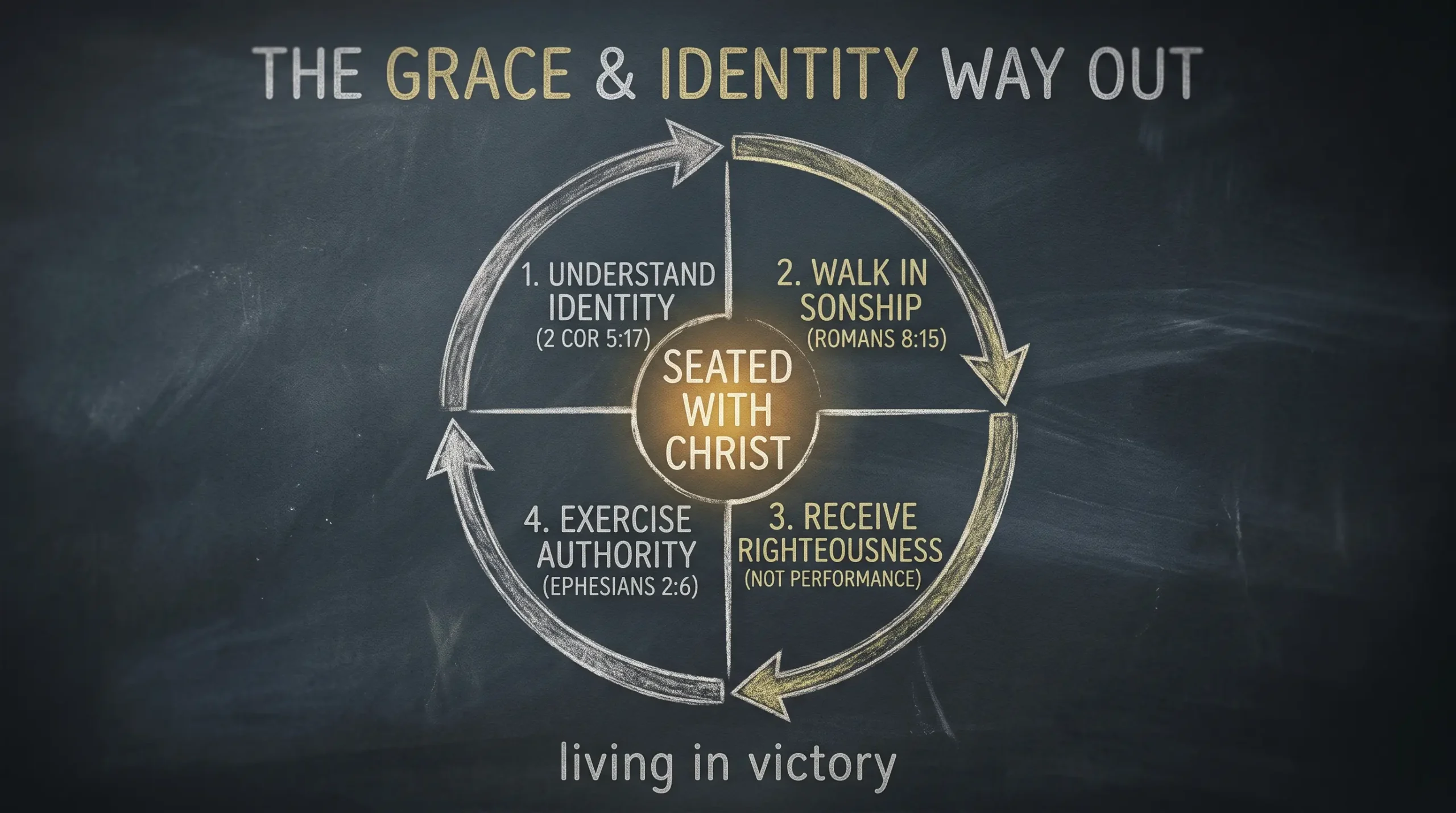
Diagram 2: The Grace & Identity Way Out — Anchored in Being Seated With Christ.
Notice the massive difference right in the center of this second chart. On the first chart, the center was The Hamster Wheel—endless human striving. At the center of this chart stands one unshakeable reality: SEATED WITH CHRIST.
In the New Covenant, you never fight for victory; you practice deliverance from a position of victory that Jesus already won. Here are the four steps of how real freedom works.
Step 1: Understand Identity (2 Corinthians 5:17)
"Therefore, if anyone is in Christ, he is a new creation; old things have passed away; behold, all things have become new." — 2 Corinthians 5:17 (NKJV)
Everything starts with your identity in Christ. On the old wheel, you believed you were just a dirty, broken sinner trying to act good. Forgetting your new creation identity is a primary reason why sin keeps returning—because when a sinner sins, they are simply doing what comes naturally to their nature.
But God did not renovate your old nature—He crucified it with Christ and raised you up brand new. When you stumble as a believer, you are not showing your "true colors"—you are acting completely out of character. Your true nature is righteous, holy, and born of God. When you know who you really are, sin loses its claim as your normal appetite.
Step 2: Walk in Sonship (Romans 8:15)
Compare this directly to Stage 2 on the old wheel. Instead of hiding in the bushes under guilt, shame, and condemnation like a terrified slave, look at what Scripture declares over you:
"For you did not receive the spirit of bondage again to fear, but you received the Spirit of adoption by whom we cry out, 'Abba, Father.'" — Romans 8:15 (NKJV)
And because there is no fear in sonship, Romans 8:1 seals the verdict:
"There is therefore now no condemnation to those who are in Christ Jesus, who do not walk according to the flesh, but according to the Spirit." — Romans 8:1 (NKJV)
When you mess up as a son, you do not run away from the Father for three days to do penance. You run straight to the Father immediately, knowing your place in the family was not earned by your performance, so it cannot be forfeited by your stumble:
"Let us therefore come boldly to the throne of grace, that we may obtain mercy and find grace to help in time of need." — Hebrews 4:16 (NKJV)
When do you have a "time of need"? Not when you have had a flawless week—when you have just blown it! Sonship runs to the throne the very second a stumble happens, shutting down the devil's condemnation before it can take root.